Trump’s Assault on Solar Masks an Epic Crisis in the Nuclear Industry
by Harvey “Sluggo” Wasserman Originally published at Progressive.org on January 25, 2018 As Donald Trump launches his latest assault on renewable energy—imposing a 30 percent tariff on solar panels imported from China—a major crisis in the nuclear power industry is threatening to shut four high-profile reactors, with more shutdowns to come. These closures could pave the way for thousands of new jobs in wind and solar, offsetting at least some of the losses from Trump’s attack. Like nearly everything else Trump does, the hike in duties makes no rational sense. Bill McKibben summed it up, tweeting: “Trump imposes 30% tariff on imported solar panels—one more effort to try and slow renewable energy, one more favor for the status quo.” The administration’s public excuse for imposing these tariffs is to “defend American workers,” and foster the production of panels here at home. The political impetus came primarily from two manufacturers—Suniva and SolarWorld—that manufacture in the United States, but are principally owned by foreigners. Ironically, a majority of Suniva is actually owned by Chinese investors, and the company is currently involved in a tortuous debt dispute that has clouded its future. SolarWorld’s parent company, based in Bonn, Germany, has been involved in bankruptcy proceedings that prompted its owners at one point to try to sell the company’s American holdings, primarily a manufacturing facility in Oregon. China’s record on renewable energy is mixed. The nation has long been committed to nuclear energy, and currently has thirty-eight reactors in operation. After the 2011 Fukushima disaster in Japan, China staged a major re-examination of its new reactor projects, but has since committed to building another twenty. But China has also poured immense resources into leading the world in photovoltaic cell production. It flooded the field with below-cost, government subsidized panels that helped drive the photovoltaics giant Solyndra into bankruptcy. Solyndra defaulted on a $500 million Obama loan, prompting a high-profile assault on renewables from fossil and nuclear advocates. In 2011, then-U.S. Senator Sander Levin of Michigan charged the Chinese with unfair trade practices, saying in a statement, “China is systematically deploying an arsenal of trade distorting policies to corner the global market in green technology products, whether it be electric cars, wind turbines or solar products.’’ But in the years since, the burgeoning U.S. market for cheap Chinese panels has birthed a very large industry. More than a quarter-million Americans now work in photovoltaics, with most of the jobs in building desert arrays or perching the panels on rooftops. Except for the very marginal pressure from Suniva and SolarWorld, solar advocates have focussed on the rapid spread of low-cost panels, even if they come from China. Powered largely by Chinese product, the cost of a solar-generated watt of power has dropped from $6.00 in the late 1990s to around $0.72 in 2016. Further drops are considered inevitable. At that price, there is virtually no economic margin for any other new energy production construction except wind and natural gas. Even gas—with its uncertain long-term supply—is on the cusp of being priced out. Thus, the industry’s reaction to Trump’s solar panel tariff has been fierce. “We are not happy with this decision,” Abigail Ross Hopper, president of the American Solar Energy Association, told Reuters. “It’s just basic economics—if you raise the price of a product, it’s going to decrease demand for that product.” Trump’s move is predicted to drop upcoming solar installations by 10 to 15 percent and cost some 23,000 jobs. Sustainable energy professor Scott Sklar, in an email to The Progressive,estimated that Trump’s 30 percent tariff will, after four years, “retard the solar market by 9 percent, cause the loss of thousands of U.S. jobs, and not save the two companies that brought the anti-competitive tariff request initially. The tariff was a political statement to China rather than specifically addressing the health of the U.S. solar industry and increasing U.S. solar jobs.”
Two major developments in the nuclear power industry further illustrate the absurdity of Trump’s decision. In California, the Public Utilities Commission has gutted a major agreement that would have kept two mammoth reactors at Diablo Canyon operating for several more years. The landmark deal—cut between Pacific Gas & Electric, the host communities around San Luis Obispo, the reactors’ union workers and two environmental groups—called for PG&E to collect some $1.3 billion from ratepayers. But the California commission cut PG&E’s take to about $300 million. To continue running the two fast-deteriorating old reactors would require massive capital repairs. The company also has admitted that all of Diablo’s power can be otherwise produced with zero- and low-carbon green technologies. While Trump’s tariffs may slightly alter the math, they’re not expected to make photovoltaics, wind, geothermal, or increased efficiency more expensive than the power Diablo might generate in the coming seven years. Thus, Diablo opponents like Linda Sealey of the San Luis-based Mothers for Peace are extremely hopeful for early shutdowns. “We think this makes it likely they’ll shut as early as 2020,” she told me January 18 on California Solartopia at KPFK radio in Los Angeles. “They just can’t compete.” A parallel fate may soon overtake Ohio’s ancient Perry and Davis-Besse reactors on Lake Erie. Because the increasingly decrepit nuclear plants have been priced out of the market and face huge capital repairs, their owner FirstEnergy has been desperately begging the Ohio legislature for massive bailouts, which it has so far resisted. As a result FirstEnergy is poised to go bankrupt, and may soon be bought out by financiers expected to insist the two reactors finally shut. A decision is expected in April.
The shutdown of four more major reactors would be a huge blow to the downwardly spiraling atomic energy industry.The shutdown of four more major reactors would be a huge blow to the downwardly spiraling atomic energy industry. California’s booming solar business employs more than 100,000 Americans, more than are currently digging coal nationwide. The void left by Diablo’s shutdown would generate thousands of Golden State jobs and billions in renewable revenue. In northern Ohio, massive wind potential is also poised to create far more jobs than are currently in place at the two reactors, with energy to be generated far more cheaply. Overall, the closure of these four high-profile plants would thus accelerate the already rapid run away from nuclear power toward renewable sources, regardless of any attempt by the Trump Administration to alter the course. ======================= Harvey “Sluggo” Wasserman’s “California Solartopia Show” is broadcast at KPFK-Pacifica 90.7FM in Los Angeles. His “Green Power & Wellness Show” is podcast at prn.fm. His History of the US and Solartopia! are atwww.solartopia.org, which will publish his America at the Brink of Rebirthlater this year.]]>
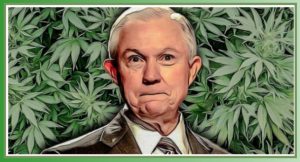 The announcement by US Attorney-General Jeff Sessions that he’ll pursue federal pot prosecutions has two age-old motivations: power and money.
Financially, of course, the Republican party is vested in America’s vast private prison system. Every new arrestee means money in the pockets of the investors who own and operate them. Keeping those cells and beds occupied is the essence of the industry”and of Pot Prohibition.
The Drug War is a giant cash cow, not only for the prison owners, but for the cops, guards, lawyers, judges, bailiffs and all the other operatives whose livelihood depends on destroying those of the nation’s tens of millions cannabis customers.
Medical legalization in about half the country, and full legalization in California, Colorado and other states, represents a serious threat to this multi-billion-dollar incarceration scam. Sessions has risen to its defense.
Then there’s the power.
As long as so many millions of people smoke the stuff, marijuana’s illegality give police the ability to bust whoever they want, whenever they want. It is the core enabler of a police state.
In fact, Pot Prohibition is a major foundation of the Republican Regime stretching from the White House and Congress to state government, the courts and beyond.
The key is disenfranchisement.
Since the Drug War’s initiation by Harry J. Anslinger in the 1930s, the principle focus has been on people of color. Anslinger promoted the term “marijuana” to deal with cannabis because it has an Hispanic twinge and aroused paranoid bigotry among the white population.
While promoting films like “Reefer Madness” to make pot appear like some sinister force, Anslinger’s minions made cannabis into a racist menace.
But it was Richard Nixon who took the assault to its ultimate depth. Nixon hated blacks and hippies. He also had a serious interest in slashing into their communities, and depriving them of the vote.
In 1972 his own Blue Ribbon Schaefer Commission recommended against Prohibition. Chaired by Pennsylvania’s liberal Governor Richard Schaefer, it said the health impacts did not warrant a national campaign.
Nixon ignored all that. Amidst a terrible war and racial upheavals, he proclaimed Drugs to be America’s most serious problem.
His own staff knew better. As aide John Ehrlichmann put it:
“The Nixon campaign in 1968, and the Nixon White House after that, had two enemies: the antiwar left and black people.
“You understand what I’m saying? We knew we couldn’t make it illegal to be either against the war or black, but by getting the public to associate the hippies with marijuana and blacks with heroin. And then criminalizing both heavily, we could disrupt those communities,” Ehrlichman said. “We could arrest their leaders. raid their homes, break up their meetings, and vilify them night after night on the evening news.
The announcement by US Attorney-General Jeff Sessions that he’ll pursue federal pot prosecutions has two age-old motivations: power and money.
Financially, of course, the Republican party is vested in America’s vast private prison system. Every new arrestee means money in the pockets of the investors who own and operate them. Keeping those cells and beds occupied is the essence of the industry”and of Pot Prohibition.
The Drug War is a giant cash cow, not only for the prison owners, but for the cops, guards, lawyers, judges, bailiffs and all the other operatives whose livelihood depends on destroying those of the nation’s tens of millions cannabis customers.
Medical legalization in about half the country, and full legalization in California, Colorado and other states, represents a serious threat to this multi-billion-dollar incarceration scam. Sessions has risen to its defense.
Then there’s the power.
As long as so many millions of people smoke the stuff, marijuana’s illegality give police the ability to bust whoever they want, whenever they want. It is the core enabler of a police state.
In fact, Pot Prohibition is a major foundation of the Republican Regime stretching from the White House and Congress to state government, the courts and beyond.
The key is disenfranchisement.
Since the Drug War’s initiation by Harry J. Anslinger in the 1930s, the principle focus has been on people of color. Anslinger promoted the term “marijuana” to deal with cannabis because it has an Hispanic twinge and aroused paranoid bigotry among the white population.
While promoting films like “Reefer Madness” to make pot appear like some sinister force, Anslinger’s minions made cannabis into a racist menace.
But it was Richard Nixon who took the assault to its ultimate depth. Nixon hated blacks and hippies. He also had a serious interest in slashing into their communities, and depriving them of the vote.
In 1972 his own Blue Ribbon Schaefer Commission recommended against Prohibition. Chaired by Pennsylvania’s liberal Governor Richard Schaefer, it said the health impacts did not warrant a national campaign.
Nixon ignored all that. Amidst a terrible war and racial upheavals, he proclaimed Drugs to be America’s most serious problem.
His own staff knew better. As aide John Ehrlichmann put it:
“The Nixon campaign in 1968, and the Nixon White House after that, had two enemies: the antiwar left and black people.
“You understand what I’m saying? We knew we couldn’t make it illegal to be either against the war or black, but by getting the public to associate the hippies with marijuana and blacks with heroin. And then criminalizing both heavily, we could disrupt those communities,” Ehrlichman said. “We could arrest their leaders. raid their homes, break up their meetings, and vilify them night after night on the evening news.  He is author or co-author of about 20 books, including Solartopia! Our Green-Powered Earth at